
Key takeaways
| Question | Answer |
|---|---|
| What does a front entrance interlock project usually include? | Walkways, steps, landings, borders, grading work, and surface finishing around the entrance. |
| Why does this work matter in Ottawa? | Freeze-thaw cycles, foot traffic, water, and salt put pressure on front entry surfaces. |
| What makes a walkway hold up? | Proper excavation, base preparation, grading, edge restraints, joint sanding, and compaction. |
| What do we build at E&A Renovators? | Walkways, front entrances, patios, driveways, steps, landings, retaining walls, sod, riverstones, and concrete slab work through our Ottawa interlock services. |
| Where can you see our work? | On our Ottawa projects page. |
| How can you reach us? | Through our contact page, by phone, or by email. |
Why Ottawa interlock services matter at the front entrance
The front entrance does real work. It gets hit every day. Boots. Salt. Water. Mud. Delivery traffic. Kids cutting across the edge. People dragging bins past the step. Ottawa winter does not ask permission. It just gets on with it.
That is why walkway and front entrance interlock matters. This part of the property sets the tone, yes, but it also takes punishment. A front entrance has to feel stable underfoot. It has to move water away from the house. It has to connect the driveway, porch, steps, and walkway without awkward gaps or weak edges. If one part fails, the whole thing starts to look tired in a hurry.
We work in that zone often. Homeowners usually call us for one of a few reasons:
- the walkway has sunk
- the front steps feel uneven
- water sits near the landing
- the entrance looks broken up
- old materials have started to shift
- the front of the house needs a cleaner path and surface
None of this is dramatic. It is just what happens outside. Time gets involved. Weather gets involved. Shortcuts from an old install start talking.
A front entrance should do a few simple things well:
| Need | What that means on site |
|---|---|
| Safe access | Stable footing from driveway or sidewalk to the door |
| Clean grade | Water moves away from the house and off the surface |
| Solid support | The walkway and entrance sit on a proper base |
| Clear layout | The path makes sense from the curb to the front step |
| Durable edges | The border and outside lines stay tight |
We keep this work plain because the space itself is plain. It is a path to the door. It is a landing for daily use. It is the first hard surface most people touch on the property. A lot of pages about front entrance work get lost in decoration. We stay with the basics. The front entrance has one job — get people in and out cleanly and hold together while doing it.
You can read more about E&A Renovators and the outdoor work we handle in Ottawa, then look through our project categories to see where walkway and entrance work shows up on real jobs.
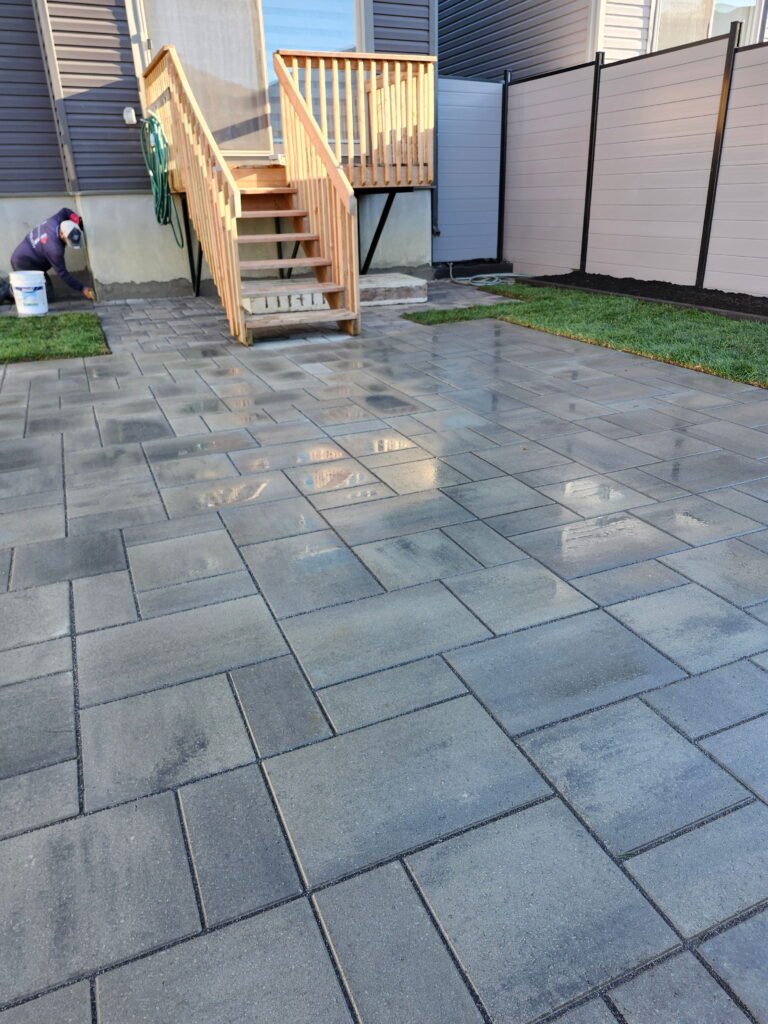
What we look at before we lay a front walkway or entrance stone
No one sees the first stage of the work after the job is done. That stage still decides the result. The stone gets the attention. The ground underneath gets the blame later if the job was rushed. That is the usual story.
Before we install a front walkway or entrance interlock surface, we read the site. We look at the shape of the path. We check how the walkway meets the driveway, porch, steps, or landing. We look at slope. We look at water. We look at access. We look at the surrounding grade and how the edges will lock into the rest of the property.
A front entrance project usually starts with a few hard questions:
- Where does water go now?
- Where should it go?
- How wide should the walkway feel?
- Does the step height make sense?
- Does the landing have enough room?
- Is the current surface failing at the center or at the edges?
- Will the new path tie into the driveway or stand apart?
Those questions matter because entrance work is tight. It sits against the house. It often ties into steps. It usually runs through narrow space. Small layout mistakes show up fast.
Here is the process we follow in broad terms:
- site review and discussion
- layout planning
- excavation
- base preparation
- setting the interlock
- edge restraint installation
- joint sanding and compaction
- final clean-up and tie-in work
The base work is the part that carries the job. A walkway can look neat on day one and still be weak. That does happen. The entrance area may hide poor grading until the first heavy thaw or rainfall. Then the problem walks out into the open.
This is why we keep the early stage simple and disciplined. We do not need poetry at the edge of a front step. We need a surface that holds.
A good site review also helps the homeowner narrow the actual job. Some front entrance projects need only a walkway rebuild. Some need the steps, landing, and path handled together. Some need interlock with sod or riverstone finishing around the edges. You can see the wider list of Ottawa interlock and landscaping services on our site, and you can contact us through our Ottawa contact page if the front of your property has started talking back.
How we plan a front entrance so the walkway, steps, and landing work as one piece
A front entrance fails when it gets chopped into separate parts. One crew handles the step. Another handles the walkway. Someone patches the edge. The landing sits there in the middle, trying to keep a straight face. The result feels pieced together because it is pieced together.
We plan front entrance interlock as one connected space. The walkway, steps, and landing need to speak the same language. That means the lines should make sense. The widths should feel intentional. The approach to the door should feel clear from the first step off the driveway or from the curb.
We usually look at the front entrance in three zones:
| Zone | What we focus on |
|---|---|
| Approach | The walkway route, width, direction, and tie-in points |
| Transition | Steps, grade change, and how the path meets the landing |
| Arrival | The landing at the door and the surface around the entrance |
Each zone affects the next one. If the walkway runs too narrow, the entrance feels pinched. If the steps sit awkwardly, the path feels forced. If the landing is undersized, the whole front entry feels cramped even when the stone looks clean.
That is why layout matters. A path should lead cleanly to the entrance. It should not drift for no reason. It should not stop short. It should not feel as though it was dropped on the yard as an afterthought. We plan the path based on real use:
- daily foot traffic
- snow clearing paths
- connection to driveway or sidewalk
- space at the door
- safe footing at grade changes
A front entrance also needs edges that make sense. Borders can help define the line of the walkway and hold the visual shape of the entry. They also help the whole front surface feel settled. On some properties, the best answer is restraint. Straight lines. Clean turns. No extra noise. On others, the lot itself pushes the layout.
We write this in a plain tone because that is how the work should be approached. A front entrance is not a mood board. It is a surface system around the main point of access to the home. It should be durable. It should be readable. It should do its job every day without asking for applause.
You can browse our Ottawa projects to see where this type of entrance work fits inside real outdoor jobs.

Walkway layout choices that change how the front of a house feels every day
A walkway seems simple until it is wrong. Then you feel it every day.
The front walkway controls movement. It tells people where to go. It frames the first few seconds at the house. It also takes steady use, and that means the path should suit the property instead of fighting it. A lot of bad walkway work comes from forcing a line that never belonged there.
We think about walkway layout in practical terms. We ask what the path needs to connect and how people actually use the space. That usually means the walkway has to tie into one or more of these points:
- driveway
- front porch
- entry steps
- side yard path
- curb or public sidewalk
Once that is clear, the layout can start to make sense. The path width matters. The turns matter. The spacing at the entrance matters. The edge condition matters.
Here is a straightforward breakdown:
| Layout factor | Why it matters |
|---|---|
| Width | A narrow walkway can feel cramped and awkward |
| Route | The path should follow the natural approach to the entrance |
| Connection points | The walkway needs a clean tie-in to the driveway, steps, or porch |
| Curves and turns | These should come from the lot, not from decoration |
| Borders | Borders can define the path and support the finish |
A front walkway also needs to respect the house. That does not mean copying every line on the facade. It means the path should suit the scale of the entrance. A large front step with a thin walkway feels off. A generous approach with a tiny landing feels unfinished. The parts need to hold together.
We also think about weather use. Ottawa properties deal with snow, ice, slush, and salt. A path needs to stay readable in those conditions. The entry should make snow clearing manageable. The edges should stay firm. The surface should support footing without odd changes in direction or elevation.
This is where plain planning saves trouble. The front walkway should not ask the homeowner to explain it. It should just work. It should give a clean route from one point to another. It should feel stable underfoot. It should still look settled after a season of real use.
For the wider picture of the hardscape work we handle, you can review our interlock services in Ottawa or read more about E&A Renovators.
The materials and site details that shape a walkway and front entrance project
Material choice matters, but it does not deserve all the attention it gets. A neat stone on a weak base still ends in complaints. The material has to suit the job, and the job has to be installed properly. That is the order of things.
For walkway and front entrance projects, interlock usually sits at the center of the work. It suits paths, landings, and front approach areas well. It gives us clean lines, flexible layout options, and a finished surface that can tie several entrance elements together. On some jobs, other site details also come into play. The path may connect to a driveway. The entrance may need steps and a landing. The edges may need sod or riverstone finishing.
Here is how the site details often break down:
| Element | Role in the project |
|---|---|
| Interlock | Main surface for walkways, landings, and front approach areas |
| Steps | Handle grade change and connect the walkway to the door |
| Landing | Creates stable space at the entry point |
| Edge restraints | Hold the surface shape and keep movement in check |
| Riverstones | Finish selected border zones and help define surface edges |
| Sod | Clean up softscape areas around the hardscape |
| Concrete slab sections | Used on selected projects where the site and design call for it |
The point is not to throw every material at the front yard. The point is to choose what the space needs and keep the result coherent. A front entrance usually benefits from discipline. The more moving parts the area has, the more important that discipline becomes.
We also watch the transitions closely. The joint between walkway and driveway matters. The meeting point between step and landing matters. The edge against lawn or planting area matters. Those are the places where poor finishing stands out. A front entrance sits too close to the eye for sloppy work to hide.
A lot of homeowners also ask about combined projects. That makes sense. A walkway and front entrance job often connects to a broader update around the house. The front path may lead into driveway work. The entrance may sit beside a retaining feature or landscaped edge. That is why our broader Ottawa services page includes hardscape and landscaping work together.
You can also look through our Ottawa project page to see how different surface elements come together on finished jobs.
Common front entrance and walkway problems we see on Ottawa properties
The front of a house has a way of showing its age without much ceremony. It does not need a dramatic collapse. A few bad signs are enough. A settled edge. A loose step. Water holding in the wrong spot. A walkway that makes people shorten their stride. That is usually where the call starts.
We see the same problems often on Ottawa properties:
- sunken walkway sections
- front steps that feel uneven
- water near the landing
- weak edges that start to spread
- patched surfaces with no clean line
- rough transitions between walkway and driveway
- old entry layouts that no longer fit the use of the property
Some of those problems start with age. Some start with weather. Some start with the first install. A front entrance takes steady wear, and any weakness under the surface gets found eventually. Freeze-thaw cycles do not miss much. Water also does not forgive poor grading. It keeps moving until it finds the low point.
The front step area is often where several issues meet. The walkway may have shifted slightly over time. The step may have settled on one side. The landing may not give enough space at the door. The edges may have started to loosen. Each part may still be standing, but the entrance feels worn and awkward as a whole.
That kind of job needs a full read. Quick patches have their place, but they do not fix a layout or base problem. If the path no longer works with the entrance, the property tells you that every day. You walk it. You shovel it. You watch water sit where it should not sit.
Here is a simple way to read the warning signs:
| Sign | What it often points to |
|---|---|
| Water pooling | Grading or drainage issue |
| Gaps at edges | Movement or weak restraint |
| Uneven surface | Settlement or base trouble |
| Awkward step transition | Poor layout or grade change handling |
| Broken visual flow | Pieced-together repairs or aging layout |
We pay attention to these signs because they tell us where the work really starts. The front entrance does not need grand language. It needs a clean diagnosis and solid execution. That is the whole thing.
For examples of the types of projects we take on, visit our Ottawa project gallery.
What to prepare before you start a walkway or front entrance interlock project
A front entrance project does not need a thick folder and a speech. It helps to have the basic facts lined up. That gives the first conversation some weight and saves everyone from guessing.
If you are looking at a walkway or front entrance interlock job in Ottawa, start with the space itself. Stand at the curb. Walk the path. Look at the steps. Look at the landing. You will usually spot the issue without much effort. The site tends to be honest.
Here is what helps before you reach out to us:
| What to gather | Why it helps |
|---|---|
| Photos of the area | They show layout, access, slope, and condition |
| Rough measurements | They help frame the scale of the job |
| Notes on the problem | Pooling water, loose steps, uneven walk, narrow path, bad tie-in |
| Project goal | Rebuild, widen, clean up, improve access, connect several surfaces |
| Timing | It helps shape the discussion and scheduling |
A short prep list works well:
- take a few clear photos from different angles
- note where the walkway starts and ends
- write down any drainage or surface movement issues
- mention whether the steps or landing also need work
- decide whether the project is only the entrance or part of a larger exterior update
This is also the point where homeowners should think about scope. Some jobs stop at the walkway. Some need the full front entrance reset. A surface that looks like a small problem may turn into a larger entry rebuild once the grade and transitions are considered. That is normal. The site decides the scope, not wishful thinking.
At E&A Renovators, our focus stays on outdoor work in Ottawa. That includes walkways, front entrances, steps, landings, patios, driveways, retaining walls, sod, riverstones, and related surface work through our Ottawa landscaping and interlock services. If you want the company details first, you can read about E&A Renovators. If you want to reach us directly, use our contact page.
The front entrance is a practical space. Treating it that way usually leads to a better result.
FAQs about walkway and front entrance interlock in Ottawa
What does a front entrance interlock project usually include?
It often includes the walkway, steps, landing, grading work, edge restraints, and finishing around the entrance area. Some projects also include sod, riverstones, or a connection into driveway work through our broader Ottawa interlock services.
Why does the base matter so much on a walkway?
The base supports the surface. If the base is weak, the walkway can settle, shift, or wear unevenly. A tidy finish does not fix poor preparation underneath.
Do front entrance projects usually include the steps too?
Many do. The walkway, steps, and landing often work as one system. If one part has failed, it makes sense to review the full entrance instead of pretending the problem stops at one line.
How do I know if my front walkway needs replacement?
Common signs include sinking areas, loose edges, uneven footing, pooling water, and awkward transitions into the steps or driveway.
Can a walkway project also include landscaping work?
Yes. A lot of entrance jobs need softscape tie-ins around the hardscape. That may include sod, riverstones, or other finishing work at the edges.
Where can I see examples of your work?
You can browse
You can browseour Ottawa projects page for the project categories we show on our site.
Do you work only in Ottawa?
Our site lists Ottawa, Ontario as our service area.
How can I contact E&A Renovators about a front entrance project?
You can reach us through our contact page, by phone at +1 613-979-7771, or by email at info@earenovators.ca.